Table of Contents
Best Restaurant Advertisement Strategies in 2026 | 0$ Ad Spend
Quick Answer
The best way to run a restaurant advertisement is organic first, paid second. Claim and fully optimize your Google Business Profile, since it’s free and it’s the first thing diners see when they search nearby. Build consistent Instagram and Facebook posting to earn trust, then layer in a small paid budget once that foundation is active, keeping the radius tight to your local area. Track cost per cover, not clicks, and don’t ignore that AI tools like ChatGPT and Gemini now recommend restaurants directly. Skip the foundation and every restaurant advertisement dollar afterward works against a weaker base.
Reliantware builds exactly this kind of layered strategy for restaurants, combining local SEO and AI visibility so free and paid advertising reinforce each other instead of competing for the same budget.
Key Takeaways
- Build Google Business Profile first. It is free and drives the most visibility.
- Post consistently on Instagram and Facebook before spending on ads.
- Layer paid ads only after organic foundations are active.
- Keep paid ad radius tight, within three to five miles.
- Measure success by cost per cover, not clicks.
- AI tools like ChatGPT and Gemini now recommend restaurants directly.
- Restaurant SEO builds visibility that lasts. Paid ads stop when spend stops.
- Budget three to six percent of gross revenue for advertising.
- Hire an agency once monthly ad spend passes 3,000 to 5,000 dollars.
- Word of mouth remains the highest trust form of restaurant advertising.
- Reliantware combines local SEO and AI visibility for restaurants
What Is a Restaurant Advertisement?
A restaurant advertisement is any paid or organic piece of content built to get someone to choose your restaurant over the one next door. That includes a Google Ads campaign, a boosted Instagram post, a flyer, and even a fully optimized Google Business Profile.
The distinction that matters is paid versus organic. Paid advertising buys placement directly: a Google Ads click, a Meta ad impression, a sponsored spot on a delivery app. Organic advertising earns attention without a media spend, through search rankings, social content, and reviews.
Consider a search for “best Italian restaurant downtown.” One restaurant pays for the top ad slot. Another shows up just below it, unpaid, because its Google Business Profile and website are properly optimized. Both are advertisements. Only one costs money per click.
Most restaurants need both eventually. But the order in which you build them decides whether your advertising budget compounds or evaporates.
What Is the Best Way to Advertise a Restaurant?
The best way to advertise a restaurant follows a specific order: organic foundations first, paid acceleration second.
Free channels take longer to build but keep working after you stop paying for them. Paid channels work immediately but stop the moment the budget does. Building organic first means paid ads land on an audience that already trusts what they find when they click through.
A restaurant that skips straight to Google Ads without a claimed profile or active social presence often sees a strange result. The ad performs, people click, but conversion to actual bookings lags. The click lands on thin evidence that the restaurant is worth the trip.
Build the foundation. Then accelerate it. Not the other way around.
Start With Google Business Profile
Your Google Business Profile is the single highest leverage asset available, and it costs nothing. A complete profile includes accurate hours, address, and phone number, high quality photos of the food and dining room, an uploaded menu, and active review responses.
When someone searches “restaurants near me,” this is what decides whether they pick you or scroll past.
Layer In Social Media Before Paid Ads
Instagram and Facebook are often where customers first get to know your restaurant, and that familiarity makes paid ads perform better later. Post consistently—three to five times a week is enough for most places. Share the dishes you’re proud of, the atmosphere guests walk into, and the people who make it all happen. When someone leaves a comment, reply like a real person having a conversation, not a corporate account reading from a script.
A restaurant that has spent six months showing up regularly online usually gets much more from its first paid campaign than one starting from scratch. By then, people have seen the food, recognized the name, and built a little trust before the ad ever appears.
How Much Should a Restaurant Spend on Advertising?
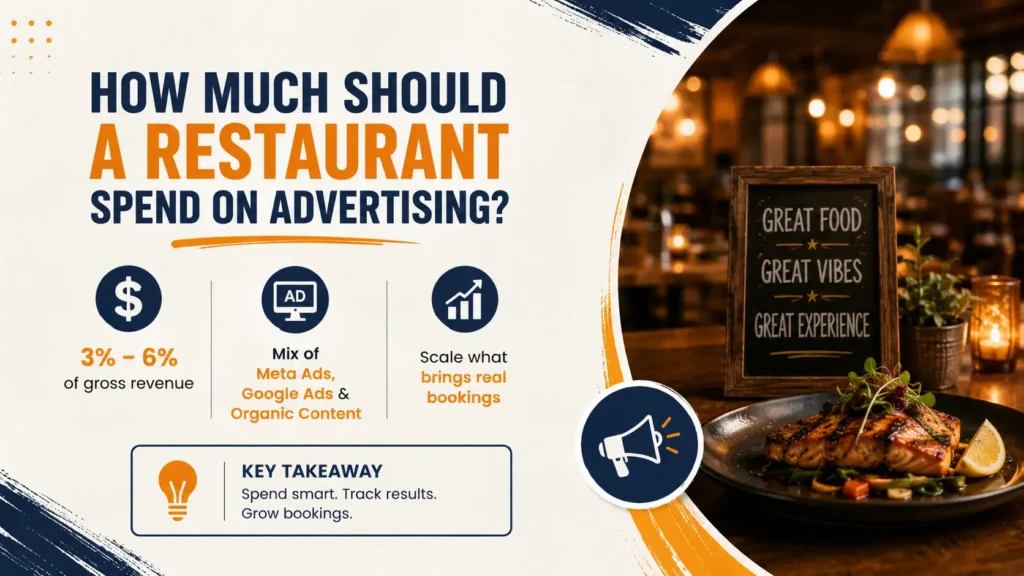
Most restaurants should budget somewhere between three and six percent of gross revenue for advertising, adjusted by growth stage and competitive pressure.
A restaurant doing 50,000 dollars a month in revenue spending three percent puts roughly 1,500 dollars a month toward advertising. Split that across a modest daily Meta ad budget, occasional Google Ads for high intent local searches, and time invested in organic content.
Honest limitation: these percentages assume the organic foundation already exists. A brand new restaurant with no reviews and an unclaimed profile needs to spend those early dollars fixing that first, not on paid ads chasing traffic to a page that won’t convert it.
Newer restaurants and those entering competitive markets often need to spend toward the higher end. Established restaurants that have earned loyal customers and strong word of mouth can often spend less on advertising, because happy guests keep bringing new people through the door.
When Paid Spend Starts Paying for Itself
Paid spend pays for itself once you can track it back to actual covers, not just clicks. If a 20 dollar a day Meta campaign consistently produces reservations that wouldn’t have happened otherwise, that’s a signal to scale it. If it produces clicks with no bookings, the creative or targeting needs work before the budget does.
Is Restaurant SEO Different From Restaurant Advertising?
Yes. Restaurant advertising buys visibility. Restaurant SEO earns it, and keeps earning it after the spend stops.
Picture two restaurants competing for the search “best sushi near me.” One pays for the ad slot every single time someone searches. The other ranks organically because its website, Google Business Profile, and content are properly optimized for that search. The second restaurant gets the same visibility for free, every day, indefinitely.
This is where Reliantware fits into the picture for restaurant owners serious about long term visibility. See how Reliantware helps restaurants dominate local search. Get a free audit at Reliantware and stop paying for the same click twice. SEO takes longer to build than a paid campaign. But once it’s built, it keeps sending diners your way without a daily budget attached to every one of them.
How Does AI Search Affect Restaurant Visibility Today?
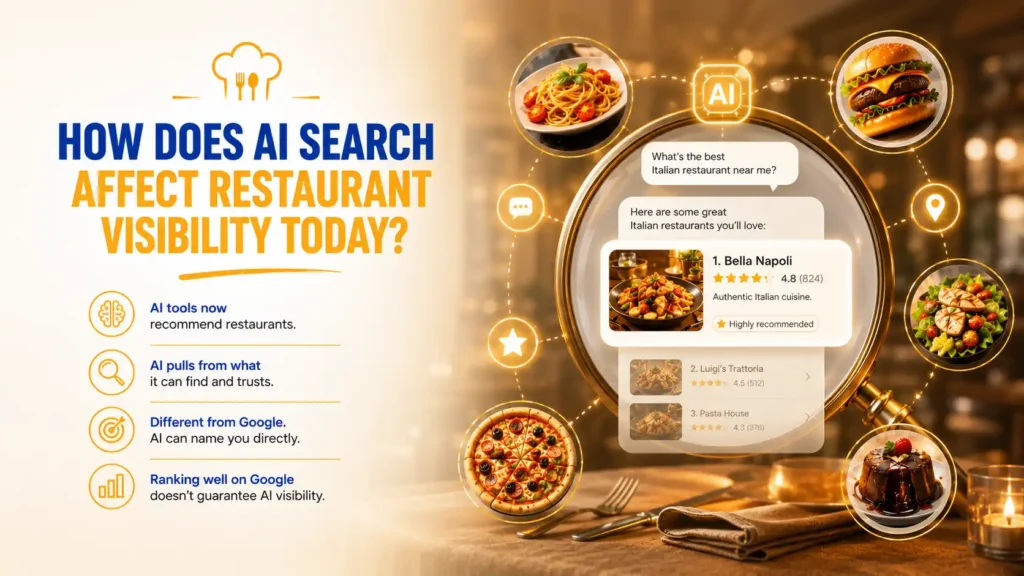
AI search tools now directly recommend restaurants, and most restaurant owners have no idea whether they’re being mentioned at all. Recent consumer review and AI search behavior data shows AI tools jumped from a small share of local recommendation traffic to a serious contender in just one year, right behind Google and Facebook.
When someone asks ChatGPT or Gemini for a restaurant recommendation, the tool pulls from whatever content it can find and trusts most. If your restaurant’s information is thin, inconsistent, or absent from the sources these tools reference, you simply don’t come up. Ever.
This differs fundamentally from ranking on Google. A Google ranking gets you a spot in a list. An AI recommendation gets you named directly, sometimes as the only answer the person receives.
Restaurants that treat classic Google rankings and AI visibility as the same problem are already behind. They’re related, but a page can rank well on Google and still get skipped entirely by AI tools that weigh different signals.
How Do I Promote My Restaurant on a Small Budget?
Start with everything that costs nothing but time. Claim your Google Business Profile. Post consistently on Instagram and Facebook. List your restaurant on Yelp and TripAdvisor with identical information across every platform.
Once the basics are in place, even a modest budget of $15–$20 a day can help more nearby diners discover you. Keep your targeting close—about three to five miles—so you’re reaching the people most likely to stop by for dinner tonight, not just scrolling from across town.
Micro influencer partnerships, trading a meal for honest coverage, often outperform bigger accounts because their followers are more local and more engaged.
How Do I Measure Restaurant Advertising ROI?
Measure restaurant advertising ROI with cost per cover, not clicks or impressions.
Take total ad spend for a campaign and divide it by the number of new covers it produced. A 300 dollar campaign that brought in 30 new covers costs 10 dollars per cover. Compare that number against your average check size and margin to see whether the math actually works.
A campaign generating clicks without covers looks active on a dashboard but contributes nothing to the bottom line. Track the number that matters.
Common Mistakes Restaurants Make
- Running paid ads before the Google Business Profile is fully optimized, sending traffic to a weak foundation.
- Discounting low margin dishes without checking contribution margin first, which can increase revenue while quietly shrinking profit.
- Treating every social platform identically instead of matching platform choice to the audience actually being targeted.
- Ignoring AI search visibility entirely, missing recommendations happening without their knowledge.
- Spending on advertising with no tracking in place, so there’s no way to know what’s actually working.
How to Choose Between DIY and Hiring an Agency
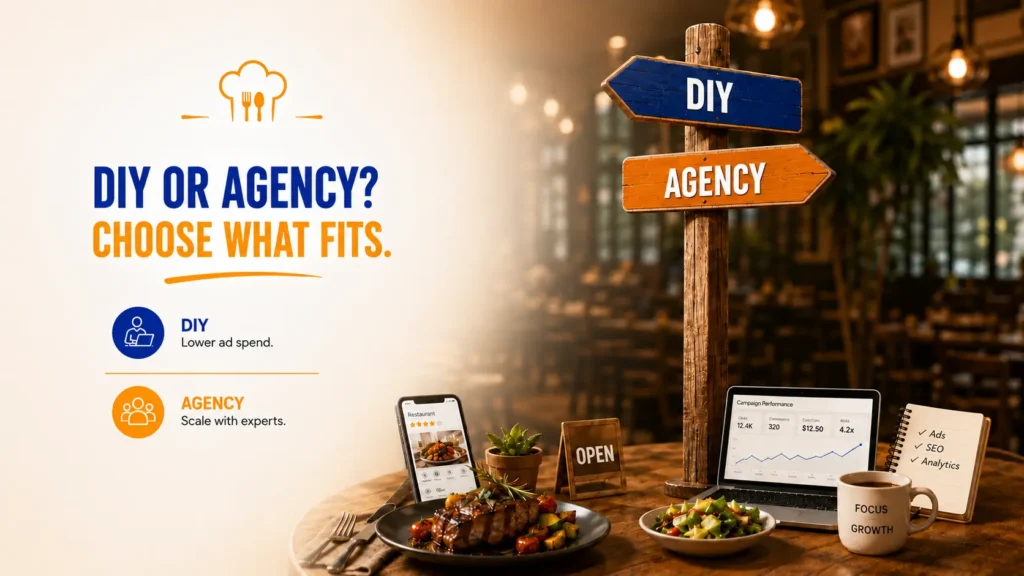
Hiring a restaurant SEO or advertising agency makes sense once monthly ad spend reaches roughly 3,000 to 5,000 dollars, once you’re managing multiple locations, or once you’re entering a genuinely competitive market where generalist effort won’t cut it.
Below that threshold, agency fees often eat too much of the available budget. A restaurant spending 500 dollars a month on ads usually gets more value from handling Google Business Profile and social media in house, then hiring a specialist for Google Ads management specifically once volume justifies it.
For most independent restaurants, it’s usually best to handle the basics yourself, bring in a specialist when a single channel needs extra attention, and consider a full agency partnership only when the business has grown enough to truly need that level of support.
Organic vs Paid Restaurant Advertising
Factor | Organic | Paid |
Cost | Free or low | Direct spend required |
Effort | Ongoing, ramps slowly | Medium, faster setup |
Time to results | Weeks to months | Days |
Compounds over time | Yes | No, stops with spend |
Conclusion
Restaurant advertisements work best as a sequence, not a scramble. Build the free foundation, layer paid spend on top of it, track cost per cover instead of vanity metrics, and don’t ignore what AI tools are already saying about your restaurant, whether you’re managing it or not. The restaurants pulling ahead right now aren’t spending more. They’re spending in the right order.
See how Reliantware helps restaurants dominate local search. Get a free audit at Reliantware.
FAQs
How to advertise for a restaurant?
Start with a free Google Business Profile, then build social media consistency. Add paid ads only once that foundation is active.
What are the 7 types of advertisements?
Print, broadcast, outdoor, digital display, search, social media, and direct mail. Restaurants get the most value from search, display, and social.
What is the best example of advertisement?
Real food photography paired with one specific offer and a clear call to action. Generic messaging without a hook rarely converts.
How to write a simple advertisement?
Open with a hook, describe one specific offer, then end with a direct call to action. Keep the whole thing short and specific.
How do I attract customers to my restaurant?
Optimize your Google Business Profile, post consistently on social media, and encourage reviews. Add a small geo targeted paid campaign once those are active.
How to promote a restaurant example?
Promote a limited time seasonal dish through Instagram, email, and a Google Business Profile post. Pair it with a small paid ad targeting a five mile radius.
What are the 7 steps of advertising?
Define the audience, set a goal, choose the channel, craft the message, and set a budget. Then launch the campaign and measure results.
How to make a catchy advertisement?
Use a strong visual of real food, a short specific headline, and a single clear offer. Avoid generic phrases that readers scroll past.
Empty Tables Cost You $4,000+/Month. Filling Them Costs $0 in Ads.
Hungry diners search Google every night. Show up there, and they come to you.
Free.
Claim your Roadmap now. No obligation