Table of Contents
15 Creative Restaurant Promotion Ideas To Boost Orders in 2026
Quick Answer
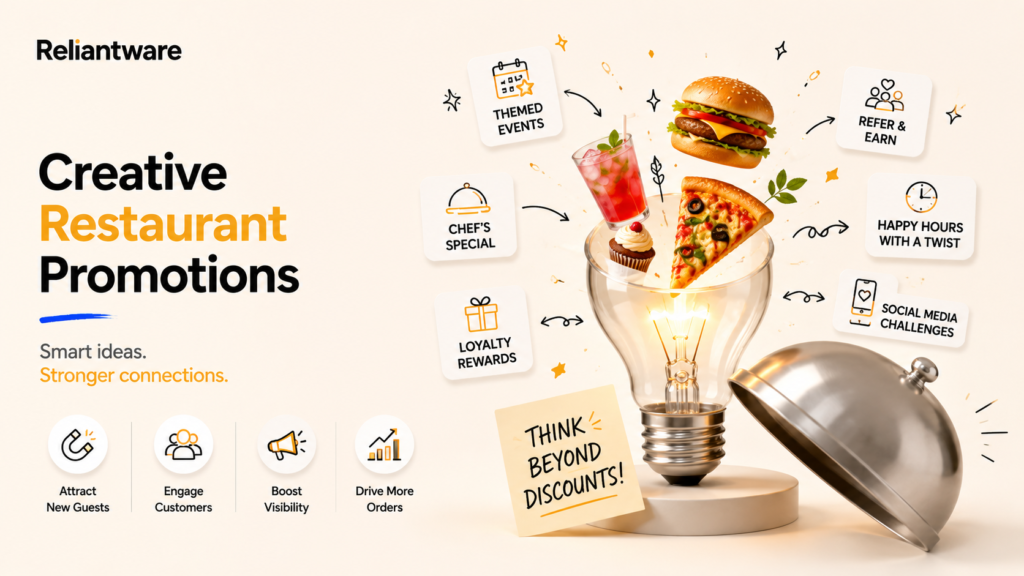
Creative restaurant promotions work best when they skip flat discounts for something people actually want to talk about, like a dice roll after the check, a stamp passport that unlocks a secret dish, or a personalized win back offer sent after ninety days of quiet. Pick the promotion based on your actual goal, whether that’s filling a slow Tuesday, rewarding loyal regulars, or reaching brand new customers, and match the mechanic to what your kitchen can realistically handle without burning out a thin staff. Set a hard end date before you launch anything, avoid discounting your highest cost menu items, and track one clear number, like covers or average check, so you know whether it actually worked.
None of it matters, though, if new customers can’t find your restaurant in the first place, which is why Reliantware pairs creative promotion strategy with real restaurant SEO, helping these ideas actually reach the people searching for a place to eat tonight.
Key Takeaways
- Skip flat discounts. Creative mechanics like a dice roll, stamp passport, or win back offer get people talking and drive repeat visits.
- Match the promotion to your actual goal: slow nights, loyal regulars, or new customers, not whatever a competitor tried.
- Fit the mechanic to your kitchen’s real capacity. Gamified promotions can overwhelm a thin staff.
- Always set a hard end date. Open-ended promotions quietly become permanent discounts.
- Avoid discounting your highest cost menu items to protect margin.
- Track one clear metric, like covers or average check, before and after every promotion.
- A great promotion still fails if new customers can’t find the restaurant, which is why Reliantware pairs creative promotion strategy with real restaurant SEO.
What Makes a Restaurant Promotion Actually Creative
A creative promotion changes behavior, not just price. Ten percent off a menu item is a discount. A dice roll after the check that might wipe out the whole bill is an experience. Same average cost to you. Completely different reaction from the guest.
Discount only promotions have a hidden cost. Once a customer learns your restaurant regularly runs twenty percent off, they wait for the discount instead of paying full price. That trains exactly the wrong habit.
Consider a casual burger spot running a straight coupon every single week versus one running a monthly dice roll night. The coupon spot sees a short spike in traffic that disappears the moment the coupon expires. The dice roll spot builds a recurring event people put on their calendar, because the excitement is the product, not the discount.
The promotions people remember usually have three things: a little surprise, a deadline that creates urgency, and a story simple enough to tell in one sentence. When customers can say, “You won’t believe what happened there today,” your promotion has a much better chance of spreading on its own.
How to Choose the Right Promotion for Your Restaurant
Match the promotion to your specific goal, not to what looks fun on social media. The most common mistake in restaurant promotion is picking an idea because a competitor tried it, without checking whether it fits your operation.
If your goal is foot traffic on a slow weekday, look at reverse happy hour or a themed weeknight. If your goal is loyalty from existing customers, a passport or stamp program does more long term work than a one time discount. If your goal is brand new customers who have never walked in, social media challenges and local collaborations reach people outside your current list.
A fine dining restaurant with a small kitchen team is usually better off avoiding a high-volume promotion, like a dice roll on a busy Saturday night. The potential buzz is rarely worth the strain it can put on the kitchen and the guest experience. A limited chef’s table event, on the other hand, matches the restaurant’s capacity, feels more exclusive, and strengthens the brand instead of stretching it thin..
Match the mechanic to your slowest day part too. A promotion built for dinner rush does nothing for a restaurant whose real problem is an empty dining room at 2pm.
Gamified Promotions That Get People Talking
Adding an element of chance turns an ordinary visit into a shareable moment. These three ideas work well because the mechanic itself becomes the marketing.
Dice roll deal. After the bill arrives, the table rolls a die. Roll a one and get a free drink, roll a six and the entire meal is free, with a weekly cap on how many free meals go out. The randomness creates genuine excitement and gets filmed for social media without you asking.
Receipt lottery. Every receipt during the week carries a unique number. Pick one winning number live on Instagram each Sunday for a prize like a gift card. This gives people a reason to keep their receipt and follow your account, which grows your audience for free.
Mystery menu night. Describe three to five dishes using vague, playful clues instead of ingredient names. Guests order blind and get rewarded with a discount or free dessert if they guess a main ingredient correctly. This works especially well for restaurants that already have a strong, distinctive menu voice.
This isn’t just intuition either. Academic research reviewing dozens of hospitality studies confirms gamified elements build real emotional engagement and repeat behavior, not just a short lived novelty effect.
Social Media Challenges That Actually Convert
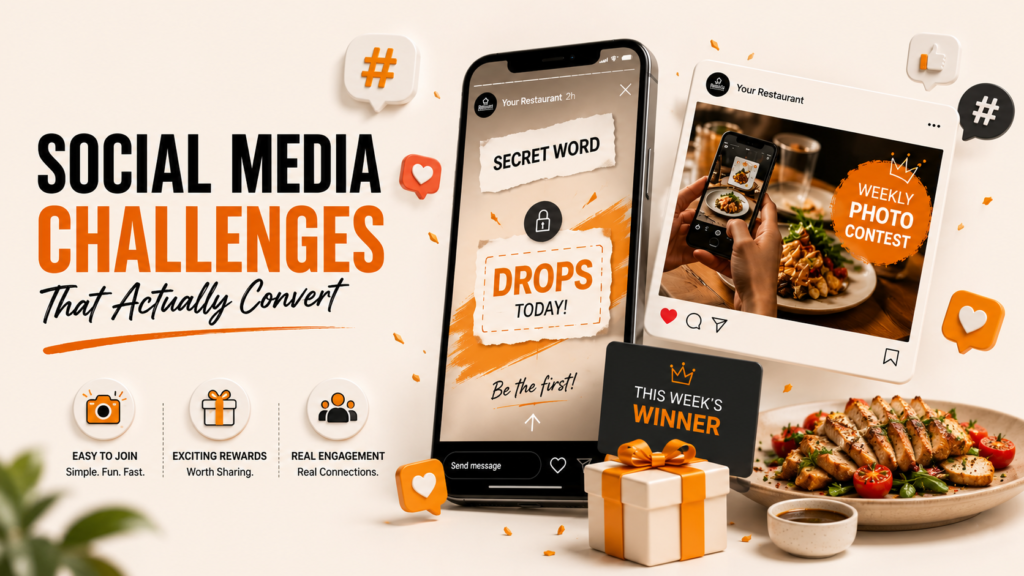
A hashtag alone does not create engagement. The challenge behind it does. Simply asking people to post a photo rarely moves the needle. Give them a specific, low effort task instead.
Branded hashtag photo contests work best with a clear weekly cadence. Pick one winner every Friday from that week’s tagged photos, announce it publicly, and give a prize worth showing off, like a free entree rather than a small discount.
Secret word drops build repeat engagement differently. Post a specific phrase on your Instagram story once a week. The first fifteen or twenty guests who mention it to their server unlock a small, unlisted dish or bonus item. This rewards people for actually following your account, not just for eating at your restaurant once.
Promotions Built for Slow Weeknights
The right promotion for a dead Tuesday looks nothing like your weekend strategy. Reverse happy hour flips the standard four to six PM discount window to late night instead, targeting service industry workers and night owls who are hungry after most kitchens close.
An industry-night happy hour works for the same reason, but with a more local, personal touch. Offering a few discounted drinks and small bites on a typically slow night gives cooks, servers, bartenders, and hosts from nearby restaurants a place to unwind after their shifts. It turns a quiet evening into a gathering spot, builds goodwill within the restaurant community, and often creates the kind of word-of-mouth that money can’t buy.
A simple weekday lunch special, a fast and affordable combo, fills a completely different gap. It targets office workers and students who want a quick, predictable, inexpensive option, and it turns your slowest shift into consistent daily revenue instead of a gamble.
Personalized Promotions Using Order History
Generic discounts feel like marketing. Personalized ones feel like recognition. If you track order history, even informally, you can turn that data into offers that feel individual instead of mass produced.
A ninety day win back campaign works well for guests who have gone quiet. Send a message after roughly three months of no visits with a meaningful discount on their next order. This single tactic often recovers customers who simply forgot you exist rather than customers who were unhappy.
Birthday club offers, where a member gets a free dessert or appetizer during their birthday month, cost very little and generate a visit that almost always includes other paying guests at the table.
Personalized offers work even better when they’re actually reaching new people too, not just repeat guests. A win back campaign only helps if new customers are finding your restaurant in the first place. Get a free audit at Reliantware and check whether your current visibility is bringing in enough new faces to build a personalized list from.
Loyalty and Passport Programs vs. One Time Deals
Promotion Type | Cost to Run | Repeat Visit Impact | Staff Effort |
One time discount | Low, but recurring if repeated often | Low, tends to attract deal seekers only | Minimal |
Loyalty or stamp passport | Moderate, spread across many visits | High, rewards accumulate over time | Low once set up |
Gamified promotion | Moderate, capped by weekly limits | High, builds a recurring event | Moderate, needs staff buy in |
A passport program built around five to ten stamps, unlocking a free meal or exclusive item, rewards the exact behavior you want: repeat visits over months rather than a single discounted transaction. One time deals move fast but rarely build the habit that keeps a restaurant full long term.
Community and Local Business Collaborations
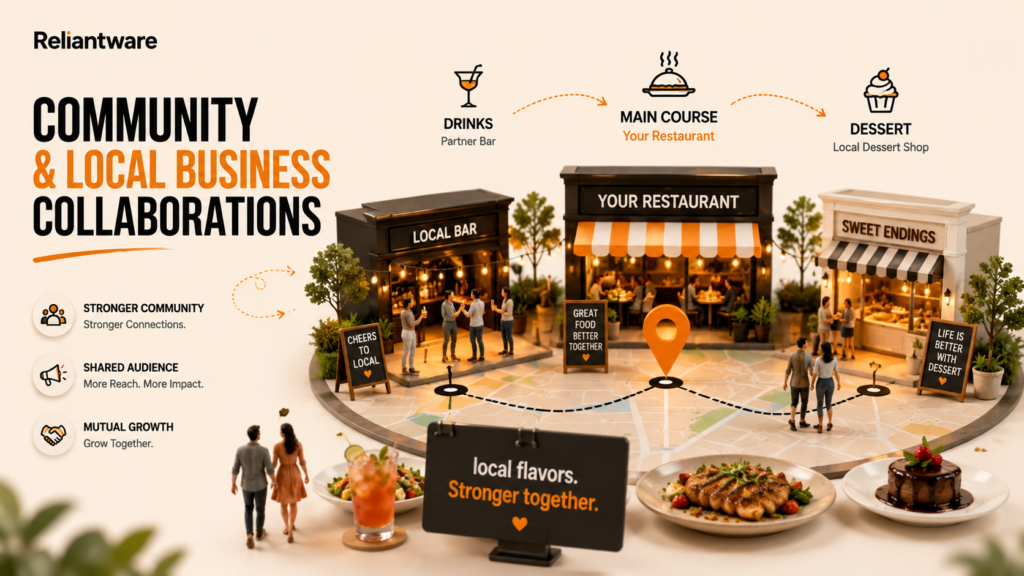
Partnering with a neighbor multiplies your reach without multiplying your marketing budget. A progressive dinner built with a nearby bar and a dessert shop, where guests get drinks at one location, the main course at yours, and dessert at the third, exposes your restaurant to two other businesses’ entire customer lists in a single event.
Local artist nights work on the same principle. Rotate a local artist’s work on your walls and host a small opening night with light bites. The artist promotes the event to their own following, and you gain foot traffic that has nothing to do with your menu at all.
Common Mistakes That Sink a Promotion
Ranked by how often they actually damage a restaurant’s results.
- Discounting your highest cost menu items. A BOGO deal on a dish with expensive ingredients erases your margin instead of protecting it.
- No hard end date. A promotion without a clear expiration quietly becomes a permanent price cut that customers now expect.
- Overloading a thin kitchen crew. A complicated gamified promotion on a night with minimal staff creates slow service that undoes the goodwill the promotion was supposed to build.
- No metric defined before launch. Running a promotion without deciding in advance what success looks like makes it impossible to know if it actually worked.
- Running too many promotions simultaneously. Stacking a loyalty program, a social contest, and a discount all at once confuses guests and makes none of them feel special.
Not every promotion fits every restaurant. A high volume gamified deal that works beautifully for a casual burger spot could damage a white tablecloth restaurant’s perceived value entirely. Know your brand before you pick your mechanic.
How Promotions Connect to Getting Found in the First Place
A brilliant promotion does nothing if the right people never see it. You can run the most creative dice roll night in the city, but it only fills tables if new customers can actually find your restaurant when they search for a place to eat nearby.
This is where promotions and search visibility connect directly. A guest who has a great experience during a themed night is likely to leave a review, and reviews feed directly into how restaurants rank in local search results and how often AI tools like ChatGPT and Gemini recommend a restaurant by name. A promotion that gets people talking does more than fill seats. Every review, share, and recommendation quietly boosts your restaurant’s visibility online too. That connection matters more than most restaurant owners realize, since the best promotion in the world underperforms if the restaurant itself is hard to find.
Conclusion
The creative restaurant promotions that actually work long term build a habit, not just a single visit. A dice roll night, a stamp passport, or a well timed reverse happy hour all succeed for the same reason: they match your restaurant’s real capacity and goals instead of copying whatever a national chain did last year. Pick one, set a clear time limit, track one number, and give it a real shot before moving to the next idea. Get a free audit at Reliantware and see how Reliantware helps dominate the local search if you want new customers to actually find you first.
FAQs
What is the most effective restaurant promotion?
Loyalty programs, personalized offers, and limited-time events are often the most effective because they encourage repeat visits and attract new customers.
How can I increase restaurant sales during slow days?
Run targeted promotions like themed nights, lunch specials, reverse happy hours, and loyalty rewards during low-traffic periods.
Do restaurant discounts actually work?
Yes, discounts can boost short-term traffic, but creative promotions and rewards usually build stronger long-term customer loyalty.
What are some low-cost restaurant promotion ideas?
Try social media contests, referral programs, loyalty cards, birthday rewards, email marketing, and local business partnerships.
How do restaurants attract first-time customers?
Restaurants attract new customers through local SEO, Google Business Profile optimization, social media, community events, and special offers.
Are loyalty programs worth it for restaurants?
Yes, loyalty programs increase repeat visits, customer retention, and overall customer lifetime value.
How often should restaurants run promotions?
Use promotions strategically, such as monthly, seasonally, or during slow periods, rather than offering discounts continuously.
What types of restaurant promotions generate repeat customers?
Loyalty points, stamp cards, VIP programs, birthday rewards, and personalized offers are excellent for encouraging repeat visits.
How can social media help restaurant promotions?
Social media increases visibility, engages customers, promotes special offers, and encourages guests to share their experiences.
How do restaurant promotions improve local SEO?
Promotions can generate reviews, shares, and local mentions, which help improve visibility in Google Maps, local search, and AI recommendations.
Empty Tables Cost You $4,000+/Month. Filling Them Costs $0 in Ads.
Hungry diners search Google every night. Show up there, and they come to you.
Free.
Claim your Roadmap now. No obligation